
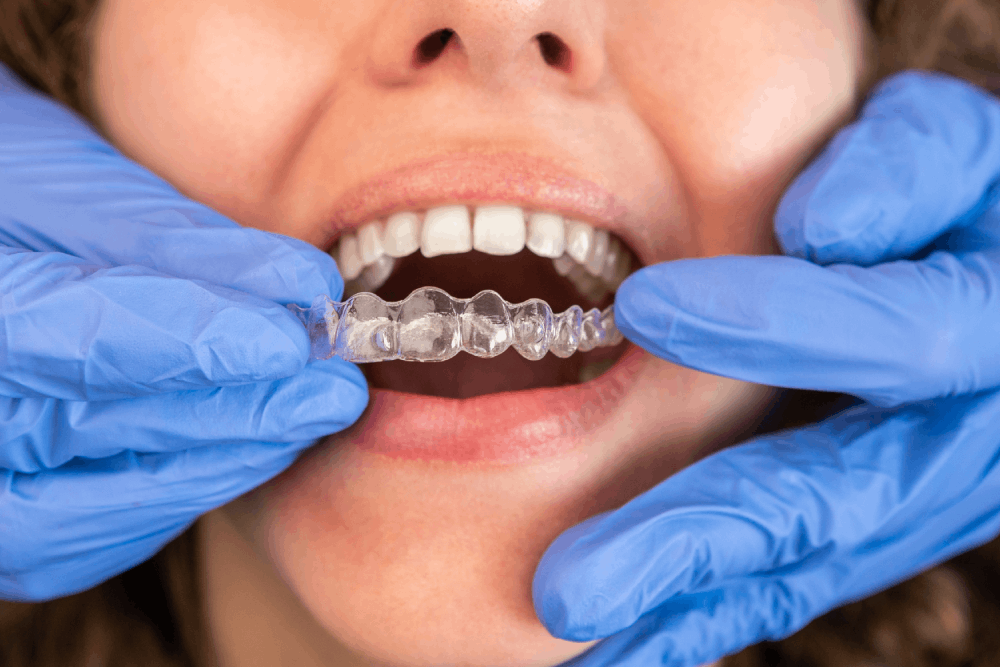
Getting your teeth straightened with Invisalign is a big decision and at our practice in Preston, we often get asked about what patients need to consider. One question that often comes up is whether Invisalign can damage, erode or wear down tooth enamel.
As Invisalign aligners are made from smooth, medical-grade plastic, they cannot erode your tooth enamel themselves. However, enamel erosion and cavities could become more likely if food or drink is trapped behind your aligners. This can restrict natural saliva flow, promote the growth of bacteria and cause demineralisation.
With excellent oral hygiene, you don’t need to choose between a straighter smile and fewer cavities.
Book your Invisalign appointment and start your smile journey today
How do enamel erosion and demineralisation happen?
When your teeth come into contact with acidic substances from bacteria, or acidic food and drink, this can cause enamel erosion (sometimes called an ‘acid attack’). Over time, as your enamel erodes, it becomes softer and eventually wears off as it loses minerals (demineralisation).
Although your saliva can neutralise acids and remineralise your enamel, this can become less effective if you frequently eat acidic or sugary food or drink, causing more erosion. Your enamel will stop protecting your teeth, and the pulp and dentin underneath can become exposed, putting you at risk of cavities, inflammation and infection.
If you grind your teeth, this can also cause enamel to erode; if this is a problem for you, we recommend wearing a night guard. These are available from the surgery; please ask your dentist if you would like to order one.
Symptoms of enamel erosion
If your enamel has started to erode, you may experience some of the following symptoms:
- Tooth sensitivity (especially to very cold or hot drinks)
- Discoloured, greying or transparent areas on teeth
- Bits of enamel coming off
- Chips or cracks
- Pain or discomfort
- Tooth decay
Could aligners cause problems with my tooth enamel?
Although research on clear aligners and enamel erosion is ongoing, extensive studies exist on fixed braces. In general, Invisalign is easier to clean than metal braces as there are no wires and brackets for food to get stuck in, and your aligners are entirely removable.
However, there are a couple of issues these studies have highlighted that are worth considering. These are:
Microenvironments for bacteria
Both aligners and braces can create a microenvironment around your teeth as they can prevent, or impede, the flow of saliva around your teeth and gums. This can mean that remineralisation from your saliva can be less effective.
Because braces are fixed and cannot be removed, they sometimes create areas where bacteria can grow, leading to dental plaque, inflammation and decay. You can avoid this by removing your aligners before eating and drinking (except water).
Trapped food and drink
If you do not clean your aligners properly after taking them out, food, drink and bacteria can sometimes become trapped in the trays. This adds to the risk of demineralisation and eventually decay. However, our dental team will be able to give you more information on how to clean your aligners properly; we recommend cleaning them as part of your bedtime routine, using any products advised by your dentist.
How leaving orthodontic issues untreated can damage tooth enamel
If you opt to have your teeth straightened through Invisalign, your aligners will gradually pull your teeth towards their final positions, where they will be more evenly spaced and therefore easier to clean.
Left untreated, orthodontic issues can themselves lead to both erosion and demineralisation of your tooth enamel if they are not treated and left to get worse.
For example:
-
Gaps between teeth
Having gaps between your teeth can lead to ‘pockets’ of plaque forming, where bacteria can flourish. Food can also get trapped between the gaps, and as it breaks down the natural acids within it can erode your enamel.
-
Narrow spaces between teeth
As teeth become misaligned or crowded, the spaces between your teeth can become so tight that you may have difficulty cleaning them, even with an interdental brush or floss.
-
Bite issues
Bite issues, including underbites, deep bites, overbites and crossbites, can lead to enamel erosion. If your teeth are misaligned or in the wrong position when you chew, they can rub against each other, eroding your enamel and potentially exposing the pulp and dentin underneath.
-
Teeth in awkward positions
If your teeth are at awkward angles or overlap each other, they can become more difficult to clean. As food being broken down cannot be cleaned, this risks eroding your enamel and eventually inflammation and decay.
Invisalign helps you avoid these issues by straightening your smile, making your teeth and gums easier to clean. You’ll also have regular checkups with our dental team to ensure everything is going well and spot any issues.
How to prevent enamel erosion and demineralisation while wearing Invisalign
Deciding to straighten your teeth can be daunting and it is natural to be concerned about the risks, including enamel demineralisation and erosion. At Holly Dental in Preston, our dental team are highly trained in Invisalign and regularly provide advice to patients concerned about this issue.
We recommend that you:
- Wear your aligners between 20-22 hours per day
- Take your aligners out while eating and drinking
- Clean your clear aligners as advised by your dentist
- Avoid or limit sugary or fizzy drinks
- Hydrate regularly with plenty of water (not sparkling as this can erode enamel)
- Eat high-calcium foods (dairy products, fish, leafy green vegetables)
- Brush and floss your teeth regularly, using any instruments recommended by your dentist
- Attend regular hygiene appointments and checkups
- Use the mouthwash recommended by our dental team
Can Invisalign really erode your enamel?
If you maintain good oral hygiene and wear your aligners as advised by your dentist, Invisalign will not lead to your tooth enamel eroding. However, if you experience any pain or tooth sensitivity while wearing Invisalign, it’s important you contact us as soon as possible so that we can treat the problem.
Having straight teeth actually protects against erosion and demineralisation, as well as giving you the confidence boost a straighter smile can bring. If you would like to find out more about Invisalign, we would love to hear from you.
Find out if Invisalign is right for you – book a consultation today
Frequently asked questions
Does demineralisation always lead to tooth decay?
Not necessarily; if demineralisation is stopped and treated early, you should not develop any cavities. If you have had an area of decay or a filling, you may develop some demineralisation around the area, creating a white spot. At Holly Dental, we offer a range of treatments to treat white spots; for more information, ask our dental team.
Is Invisalign better for tooth enamel than braces?
At our Preston-based practice, many patients prefer Invisalign to braces because the clear aligners are easier to clean, and plaque does not build up as easily as it can with fixed braces. This is because Invisalign can be removed when necessary, for example when eating or cleaning your teeth.
Both braces and Invisalign have benefits and drawbacks; for example, Invisalign is ideal for patients who need discreet, removable treatment, but braces might be more suitable if you have complex or severe orthodontic issues.
How much does Invisalign cost in Preston?
Invisalign treatment starts from £2000. However, a consultation for Invisalign is free at Holly Dental, with a £30 refundable deposit on booking. We also offer a range of affordable treatment plans for your peace of mind.
Is acid the only thing that can erode tooth enamel?
No. If you grind your teeth, this can erode your tooth enamel and cause demineralisation over time. We recommend purchasing a night guard; they start from £150.