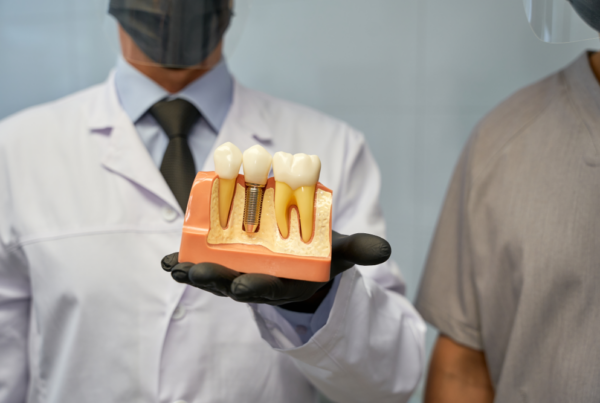

First, implants are designed to last much longer than false teeth and are also more comfortable. They also stimulate the jawbone so it stays healthy even after you lose your natural teeth.
They’re attached to custom-made restorations to give you a natural-looking smile. And since they’re permanently attached, they work much better than artificial teeth that tend to move unexpectedly.
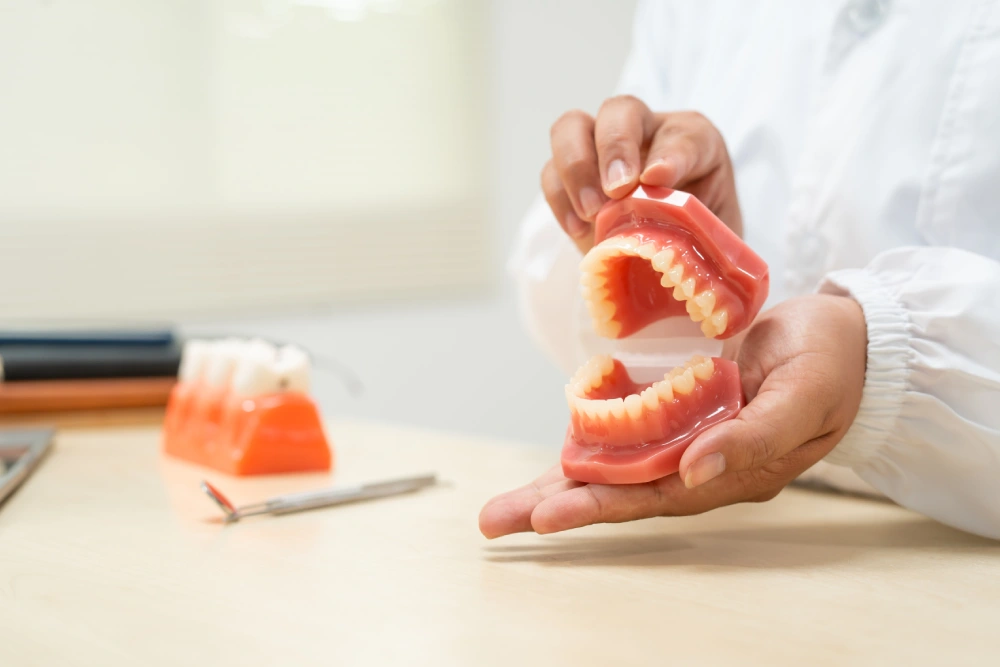
On the other hand, dentures are great if you’re looking for a more affordable tooth loss solution, since they cost less than dental implants. Plus they don’t require surgery, which some people are hesitant to go through to solve missing teeth.
Are you choosing between these two treatments to solve tooth loss? Let’s go for a deeper look at their benefits.
What makes implants better
- Permanent
An implant is designed to stay put in its position attached to the jawbone. It will solve your tooth loss for a few decades and can even last a lifetime if it’s cared for well. Because it’s fixed in place, you can avoid the issues experienced by denture wearers.
- Convenient
They work like natural teeth, and you take care of them the same way. You won’t have to go through the hassle of removing them every time you brush and floss, which is what you need to do with removable dentures.
- Comfortable
Dentures become uncomfortable when they move inside the mouth. Implants take the pain out of your experience because they’re anchored securely to the jawbone. This way, you can eat and speak comfortably without being pinched by your artificial teeth.
- Confidence boosting
Embarrassed because of missing teeth? This treatment gives you a smile you can be proud of! The restoration is custom-made to look like your natural teeth and gives you peace of mind by staying firmly in place.
- Bone saving
When it fuses with the surrounding bone tissue, the implant stimulates the jaw so it doesn’t deteriorate. Without it, over time the jawbone will thin out after tooth loss.
Why choose dentures
- More affordable
Dentures cost less than implants. The price is much lower because it doesn’t include materials for the titanium post and crowns that are needed for an implant treatment, plus there’s no surgery involved.
- Non-surgical
Removable dentures are made without surgery, which can be worrisome for some people. This means recovery and downtime are shorter, except for cases when a surgical tooth extraction is needed before denture placement.
Faster
Getting dentures can take several weeks to finish. The timeline is shorter compared to waiting for months for dental implants to heal before they can be attached to tooth restorations.
It’s not too late to escape your tooth loss problem. Get your dental implants or dentures from an award-winning clinic in Preston. Get in touch with us now.
Conclusion
Dental implants and dentures both solve tooth loss, with each treatment having distinct benefits. The titanium posts are fixed in place, more convenient, stop bone thinning, and attached to natural-looking restorations, so you’ll have more confidence to smile. Meanwhile, false teeth are more affordable, don’t require surgery, and typically faster to complete. Deciding on the best option depends on what you prioritise when it comes to an effective solution to missing teeth.
FAQs
How are dental implants better than dentures for eating?
They’re fixed in place, making it easier to chew your food. They’re also more comfortable because they don’t rub against the inner cheek, gums, or tongue while you’re eating. The titanium posts embedded into the jawbone will also increase the strength of your bite and feel like your natural teeth.
How long do they last?
Typically, dental implants last a few decades to a lifetime depending on how they’re cared for. Meanwhile, dentures last an average of 5 to 10 years before they need replacement. This will depend on how long they maintain a comfortable fit and if they become damaged or stained over time.
Which one is more expensive?
Typically, dental implants cost more than removable dentures. The total amount includes the price of the titanium post, diagnostic tests while planning the treatment, surgery and anaesthetic, and the tooth restoration to restore the smile.
Which option is more comfortable?
Both of them are comfortable since the restorations are custom-made. However, dental implants stay comfortable for much longer since they’re attached permanently. They also prevent bone and gum shrinkage, which are the reasons why dentures loosen over time and become uncomfortable to use.
Can I avoid surgery if I get dentures?
Yes, it’s a non-surgical procedure. However, some cases may require surgery before denture placement, such as the removal of impacted teeth and other conditions with complications.
Can I eat anything with dentures and dental implants?
Yes. Both tooth loss solutions don’t have dietary restrictions. However, you should be careful with chewy items that can stick to dentures and cause them to slip off while you’re eating.
What should I do if the artificial teeth are damaged?
For dental implants, you’ll need to have the dental crowns or bridge replaced if this is the case. This doesn’t apply to the titanium post because it’s already attached permanently to the jawbone. On the other hand, dentures can be repaired if one or a few teeth are detached, or replaced if larger sections are broken.
Will they improve my appearance?
Yes. The restorations for both treatments are customised considering your facial shape and features, with the goal of restoring a beautiful, natural-looking smile. Implants stimulate the jawbone to stop it from thinning after tooth loss. This will keep you from looking much older, which happens when the gums and bone around the mouth shrink.